
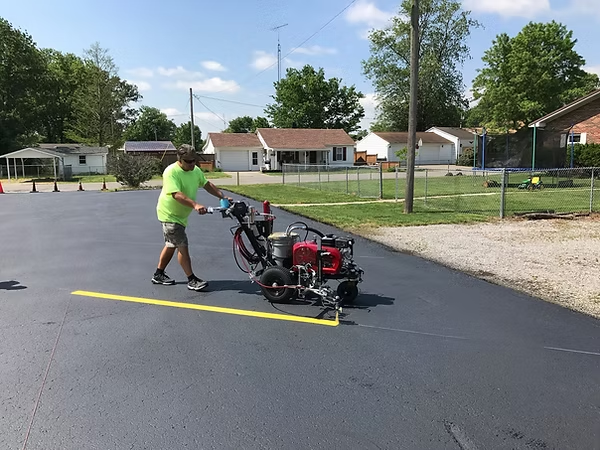
Pavement marking and line striping do more than “make a parking lot look nice.” The right markings improve traffic flow, reduce fender-benders, support safer walking routes, and help your property stay compliant with accessibility expectations.
If your lines are fading, your layout no longer matches how tenants or customers use the site, or you’ve had near-misses around entrances and crosswalks, it’s usually time to review your striping plan—not just repaint what’s already there.
What are pavement markings and line striping?
Pavement markings and line striping are the painted (or applied) lines, symbols, and messages installed on asphalt or concrete to guide vehicles and pedestrians. They typically include stall lines, directional arrows, stop bars, fire lanes, crosswalks, loading zones, and accessibility markings.
Good markings are visible, consistent, and placed with intent—so drivers understand where to go and where not to go, and pedestrians have predictable, safer routes through the property.
Why do pavement markings matter for safety and liability?
Clear markings reduce confusion. Confusion is what causes abrupt stops, wrong-way turns, pedestrians walking in drive aisles, and blocked fire lanes.
From a practical standpoint, refreshed striping helps you:
- Reduce conflict points at entrances, intersections, and tight turns
- Encourage one-way circulation where it’s needed
- Create predictable pickup/drop-off zones
- Clearly separate walk paths from vehicle travel lanes
For roads open to public travel, visibility requirements can also tie into standards around maintaining pavement marking retroreflectivity (night visibility), which is covered in MUTCD-related guidance and FHWA rules.
When should you restripe a parking lot or roadway?
A simple rule: if the layout is hard to read at a glance, you’re overdue.
Common triggers include:
- Fading lines (especially at entrances, ADA spaces, crosswalks, and fire lanes)
- Sealcoating (striping typically needs to be re-applied after)
- Tenant change or new traffic patterns (delivery routes, drive-thru flow, pickup zones)
- Safety complaints or incidents (near misses, blocked access, wrong-way issues)
- Compliance upgrades during maintenance projects (restriping is often the most cost-effective time to fix layout issues)
What should be included in a well-designed striping plan?
A solid striping plan starts with how the site actually functions—then turns that into clear, enforceable markings.
A typical plan may include:
- Standard and compact parking stalls (where appropriate)
- Accessible stalls + access aisles + signage locations
- Crosswalks and pedestrian routes (especially from accessible parking to entrances)
- Directional arrows, stop bars, and “Do Not Enter” markings where needed
- Loading zones, fire lanes, and no-parking hash marks
- Clear curb/edge guidance in tight circulation areas
The best plans balance space efficiency with safe movement—not maximum stalls at the expense of chaos.
How does ADA factor into parking lot striping?
If you restripe, it’s a smart time to confirm accessible parking features are correct—because restriping is often considered a readily achievable upgrade path.
At a high level, accessible parking requirements address:
- Proper space sizes and access aisles
- Van-accessible requirements (including vertical clearance in certain facilities)
- Identification signage and location considerations
- An accessible route connecting parking to the entrance
For example, the ADA Standards specify minimum widths for car and van spaces and require adjacent access aisles.
(Exact counts and layout requirements depend on total spaces and the facility type—so it’s worth treating ADA as part of the plan, not an afterthought.)
What materials are used for pavement markings, and how do you choose?
Most property owners think “paint,” but material choice impacts durability, downtime, and visibility.
Common options include:
- Traffic paint: cost-effective and fast, but typically wears faster in high-turn or high-traffic areas.
- Thermoplastic / preformed thermoplastic: more durable and often used where longevity matters (busy entrances, crosswalks, stop bars). Some products are designed to last multiple times longer than paint in heavy-wear areas.
- Reflective elements: glass beads and similar treatments can improve night visibility depending on application and context.
The “right” answer depends on:
- Traffic volume and turning movements
- Snow plowing or harsh wear conditions
- How often you can tolerate restriping
- Whether night visibility is a major concern
- Budget vs lifecycle cost (not just upfront price)
How does the line striping process work from start to finish?
Most successful projects follow a predictable workflow:
- Site review + measurements
Confirm current layout issues, worn areas, drainage concerns, and traffic flow needs. - Layout design (or redesign)
Decide what stays, what changes, and how to improve flow, safety, and accessibility. - Surface preparation
Cleaning is critical. Dirt, oils, and loose debris reduce adhesion and shorten lifespan. - Layout markings + installation
Lines are snapped/measured, then applied with the chosen materials and thickness. - Dry/cure + reopen plan
Good planning reduces disruption—especially for retail lots, multi-tenant sites, and medical offices.
Can you restripe over old lines, or should you remove them?
Sometimes you can restripe directly—especially if you’re matching the same layout and the old markings are faint.
But if you’re changing the plan (stall widths, drive aisles, accessible stall locations, fire lanes), you may need marking removal or black-out so drivers aren’t seeing conflicting guidance. Conflicting markings are worse than fading markings because they create split-second decision mistakes.
What results should you expect after professional pavement marking?
When striping is designed and installed correctly, you typically get:
- Smoother traffic flow and fewer awkward merges
- Better space utilization (without confusing drivers)
- Clearer pedestrian movement patterns
- A more “managed” appearance that reflects well on the property
- Easier enforcement of fire lanes, loading zones, and no-parking areas
FAQ
How long does parking lot striping last?
It depends on traffic, turning wear, weather, and material choice. High-turn areas (entrances, endcaps, crosswalks) usually wear first, which is why many properties use more durable materials in those zones.
Do I need to restripe after sealcoating?
In most cases, yes—sealcoating typically covers existing markings, so restriping is part of finishing the job.
How do I know if my accessible parking is compliant?
Accessible parking involves space size, access aisles, signage, and an accessible route to the entrance. If you’re restriping, it’s a practical moment to verify these elements.
Is night visibility really a big deal?
If your site has evening traffic (restaurants, hospitals, apartments), visibility matters. Federal guidance for roadways open to public travel addresses maintaining minimum retroreflectivity for longitudinal markings in certain contexts.
Can you redesign my parking lot to fit more spaces?
Often, yes—but the bigger win is usually better circulation (reducing confusion) and smart space planning, not just adding stalls.
Conclusion
Pavement marking and line striping are one of the fastest ways to upgrade safety, traffic flow, and the overall “order” of a property. If you’re simply repainting faded lines, you may miss the opportunity to fix circulation problems, clarify pedestrian paths, or correct layouts that no longer match how the site is used.
A professional striping plan should make your lot easier to navigate immediately—without guesswork—while supporting accessibility and long-term durability.
Why HSC Pavement Maintenance is Your Ideal Choice for Pavement Marking & Line Striping?
With decades of experience, HSC Pavement Maintenance approaches striping as a site-function project—not just a repaint. That means we look at how vehicles and pedestrians actually move through your property, then apply markings that make the flow clearer, safer, and easier to manage.
We also focus on workmanship and longevity: correct layout, clean surface prep, and materials that match your traffic realities. The result is striping that looks crisp on day one—and holds up better where your lot takes the most abuse.
Contact HSC Pavement Maintenance to Upgrade Your Striping
If your lot is fading, confusing, or due for a layout refresh, HSC Pavement Maintenance can help you plan and install pavement markings that improve safety, flow, and overall property appearance.
Call or request a quote today to schedule a site review and get a striping plan that fits how your property really operates.