A commercial parking lot is one of the first “touchpoints” customers experience—and one of the easiest places for small problems to quietly become expensive. In a market like Evansville, where temperature swings and seasonal moisture can stress pavement, routine asphalt maintenance is less about cosmetics and more about controlling risk: safety, liability, drainage issues, and premature pavement failure.
Below is a revised, more complete guide to the benefits of asphalt maintenance (and a practical playbook you can actually use).
What counts as “asphalt maintenance” for a commercial property?
Asphalt maintenance is a set of preventative and corrective services that slow pavement deterioration, protect the base, and keep the lot functional and safe. For most businesses, that usually includes:
- Crack sealing / crack filling to keep water and debris from widening cracks and weakening the structure. Research and preservation guidance commonly cite water infiltration as a key mechanism of pavement damage.
- Sealcoating to add a protective barrier and help reduce surface oxidation and moisture intrusion.
- Pothole repair / patching to eliminate trip hazards, reduce vehicle damage, and prevent the base from breaking down further.
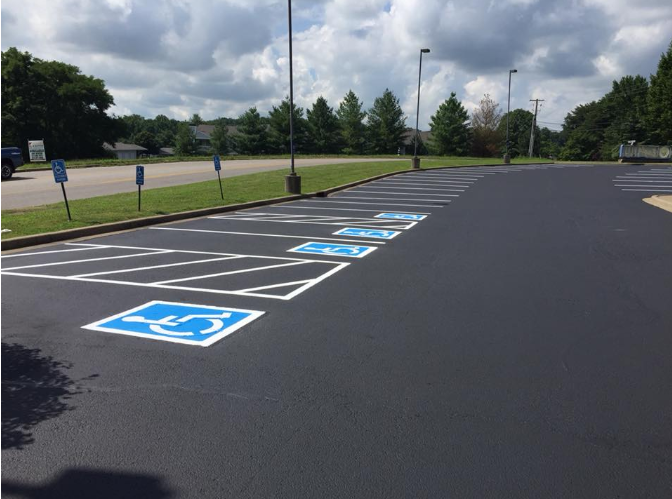
- Striping and pavement markings to restore traffic flow, parking efficiency, and visibility—especially for accessible spaces.
- Drainage and surface corrections where needed (because standing water accelerates deterioration and creates safety issues).
Think of it like roof maintenance: you’re not waiting for failure—you’re preventing it.
Why does curb appeal matter more than most owners think?
Curb appeal isn’t just aesthetics—it’s conversion.
A clean, dark, well-marked lot signals that the business is maintained, safe, and professional. Customers often decide how they feel about a location before they ever walk inside. Faded striping, broken edges, and potholes can create the opposite impression: rushed, neglected, and inconvenient.
If your property is retail, medical, restaurant, or service-based, the parking lot is part of the customer experience—not an afterthought.
How does asphalt maintenance reduce safety issues and liability risk?
Cracks, potholes, and uneven pavement increase the likelihood of slips, trips, and falls—especially at night or during wet conditions. From a workplace standpoint, OSHA’s walking-working surfaces rules emphasize keeping surfaces maintained and free of hazards.
Even if you’re primarily thinking about customers (not just employees), the same practical reality applies: a smoother, more predictable surface reduces incidents. The maintenance that tends to have the biggest safety impact fast:
- Pothole patching in pedestrian-heavy zones (entries, crosswalks, loading areas)
- Crack sealing to stop crack expansion into trip edges
- Re-striping to improve flow and prevent “chaos parking”
- Reflective markings and clear ADA access aisles
What does “ADA-friendly pavement” actually mean for parking lots?
ADA compliance isn’t only about having the right number of accessible spaces—it’s also about proper markings, signage, and usable routes. ADA guidance makes clear that accessible parking is required for businesses and includes requirements around layout and identification.
From a pavement-maintenance perspective, the biggest practical issues are:
- Faded or missing accessible markings and access aisles
- Surface damage that makes routes harder to navigate
- Poor lot organization that blocks accessible paths
Refreshing striping and keeping those spaces in good condition isn’t “nice to have”—it’s part of keeping access reliable.
How does preventative maintenance actually save money over time?
Pavement preservation programs focus on a simple principle: treat pavement while it’s still in decent condition to slow deterioration and extend service life cost-effectively.
Here’s what that looks like in real terms:
- Small cracks → sealed early = reduced water intrusion and slower structural breakdown.
- Minor surface wear → sealcoat = better protection against oxidation and moisture.
- Isolated failures → patching = prevents base contamination and larger excavations later.
Once water gets into the pavement system and the base is compromised, repairs stop being “maintenance” and start becoming “reconstruction.” Preventative work is how you stay on the affordable side of that line.
How does asphalt maintenance extend pavement life in Southern Indiana’s conditions?
Water is one of the biggest enemies of asphalt performance because it can enter through cracks and weaken the structure. Crack sealing is widely used in preservation specifically to prevent water infiltration and extend pavement life.
Sealcoating also plays a protective role by adding a barrier against moisture and wear and helping slow oxidation.
In practical terms, the longer you keep water out and protect the surface, the longer you delay major failures like:
- widespread alligator cracking
- base failures and recurring potholes
- edge collapse
- rutting and depressions that hold water
Can asphalt maintenance improve traffic flow and parking efficiency?
Yes—and this is a hidden profit lever for busy locations.
Fresh striping and clear markings reduce confusion and improve circulation, which matters more than people think in:
- peak lunch/dinner rush businesses
- multi-tenant retail and office lots
- medical practices with tight scheduling
- warehouses and loading-heavy operations
Better flow reduces near-misses, decreases congestion, and helps customers feel like the location is easy to use.
How does asphalt maintenance support environmental and stormwater goals?
Parking lots are impervious surfaces—stormwater runs across them and can pick up pollutants before flowing to storm drains and waterways. EPA stormwater resources explain that runoff from surfaces like streets and parking lots can collect pollutants and transport them to water bodies.
While maintenance doesn’t “solve” stormwater on its own, it can help support better outcomes by:
- reducing surface breakdown that creates debris and loose aggregate
- helping lots drain more predictably (less standing water, fewer degraded spots)
- pairing well with good housekeeping (sweeping, spill cleanup) as part of a broader plan
What’s a practical asphalt maintenance plan for a commercial lot?
A solid plan is simple: inspect, prioritize, and treat early.
- Inspect twice per year (and after harsh seasons).
Look for new cracks, drainage trouble spots, raveling, and faded striping. - Fix water pathways first.
Cracks + standing water areas = the fastest route to expensive failures. - Crack seal before the crack network spreads.
This is the “high ROI” work that prevents escalation. - Patch potholes and failing areas.
Especially at entrances, dumpster pads, loading zones, and turning radii. - Sealcoat on a schedule appropriate to your traffic and condition.
The goal is protection and consistency, not just a darker color. - Re-stripe when visibility drops.
If customers can’t easily see stalls, arrows, and access aisles—your lot is already underperforming.
How do you know it’s time to repair vs. resurface vs. replace?
Use these quick rules of thumb:
- Maintain (seal + crack seal) when pavement is mostly intact and cracking is limited.
- Repair/patch when you have localized failures (potholes, edge breaks).
- Resurface/overlay when the surface is broadly worn but the base is still stable.
- Replace/reconstruct when failures are widespread, deep, and recurring—often tied to base issues and long-term water damage.
If you’re seeing the same potholes come back in the same locations, that’s often a sign the problem is below the surface.
FAQ
How often should a business sealcoat its parking lot?
It depends on traffic volume, sun exposure, and current condition, but most commercial properties benefit from a repeating schedule that prioritizes crack sealing first and sealcoating when the surface is still in serviceable shape. Sealcoating is most valuable as a protective treatment—not as a last-ditch fix for major failures.
Is crack sealing really worth it?
Crack sealing is a standard pavement preservation practice specifically used to reduce water infiltration and slow deterioration, which is why it’s frequently recommended early in a pavement’s life.
Do parking lot conditions affect ADA accessibility?
Yes. ADA parking requires accessible spaces and proper identification/marking, and maintaining the usability of those spaces and routes is part of keeping access dependable.
Does asphalt maintenance help with slip-and-fall risk?
A well-maintained, hazard-reduced walking surface lowers trip hazards and supports safer conditions. OSHA’s walking-working surfaces rules emphasize maintaining surfaces free of hazards and maintaining them appropriately.
What’s the fastest “high impact” improvement for a worn lot?
For most businesses: pothole repairs + crack sealing + re-striping. That combination improves safety, appearance, and usability quickly—often without the cost of major rehab.
Conclusion
Asphalt maintenance is one of the most controllable expenses in commercial property ownership because it prevents the kind of pavement failures that force big, disruptive projects. When you keep water out, repair damage early, and maintain clear markings, you protect more than asphalt—you protect customer experience, safety, compliance, and long-term capital budgets.
For Evansville-area businesses, a proactive plan is the difference between predictable upkeep and surprise reconstruction.
Why HSC Pavement Maintenance is Your Ideal Choice for Asphalt Maintenance?
HSC Pavement Maintenance brings a pavement-management mindset to commercial lots—meaning you’re not just buying a single service, you’re building a plan that protects your property over time. With a full range of capabilities (crack sealing, sealcoating, patching, striping, and more), HSC can address the entire lifecycle of your pavement instead of treating symptoms one visit at a time.
Just as importantly, HSC understands the practical realities businesses care about: minimizing disruption, prioritizing the highest ROI repairs, and keeping your lot safe and easy to navigate. Whether you manage one location or multiple sites, a consistent maintenance approach helps you avoid costly surprises and keep your property looking professional year-round.
Ready to improve your lot? Contact HSC Pavement Maintenance
If your parking lot has cracking, potholes, faded striping, or drainage trouble spots, HSC Pavement Maintenance can help you build a maintenance plan that fits your budget and timeline.
Request a free project estimate from HSC Pavement Maintenance (Evansville location) and get clear next steps for protecting your pavement.