
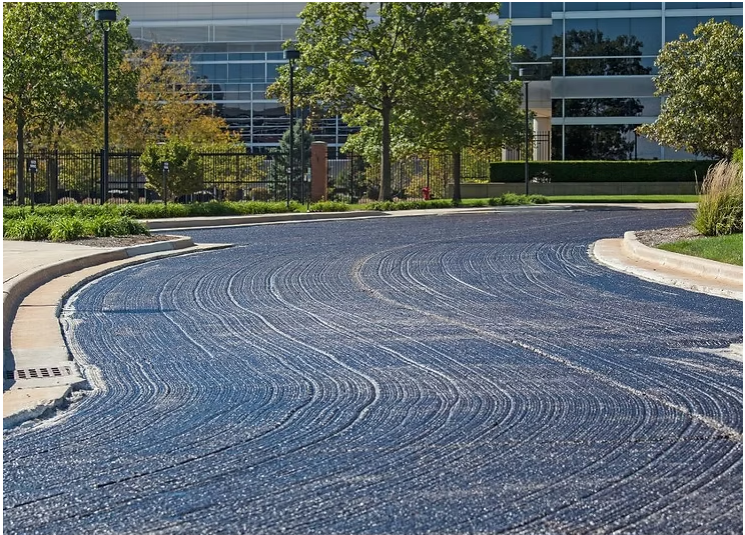
Asphalt milling (often called cold planing or asphalt grinding) is the controlled removal of a specific thickness of existing asphalt so the surface can be corrected and properly prepared for an overlay. Instead of tearing everything out, milling targets the problem layer—restoring shape, smoothing defects, and setting the project up for a longer-lasting resurfacing.
In short: milling is how you “reset” a pavement surface so the next layer performs the way it’s supposed to.
What is asphalt milling, and what does it actually do?
Asphalt milling is the process of grinding off a measured portion of an asphalt surface using a milling machine (cold planer) with a rotating drum and cutting teeth. The goal is to remove damaged, uneven, or poorly sloped asphalt while preserving the sound material below whenever possible.
This process is commonly used to:
- Remove rutting and surface irregularities
- Restore grade and cross slope for drainage
- Create a uniform, well-textured surface for an overlay to bond correctly
How does asphalt milling work from start to finish?
Most milling projects follow a predictable flow:
- Pavement evaluation and scope
A contractor reviews distresses (rutting, cracking, raveling, settlement) and confirms whether the issue is primarily surface-related or structural. If the base is failing, milling alone won’t solve the root problem. - Set milling depth and profile
The plan defines how much material will be removed and where—often focusing on wheel paths, low spots, and transitions. Milling is frequently used specifically to restore grade and transverse slope. - Mill the surface
The cold planer removes asphalt to the specified depth, producing a consistent texture that can serve as a temporary driving surface or accept an overlay quickly. - Collect and manage millings (RAP)
Removed material is collected and hauled as reclaimed asphalt pavement (RAP), which can be reused in future asphalt mixtures—cutting waste and reducing reliance on virgin aggregate and binder. - Cleanup and surface prep
After milling, crews sweep, address edges, adjust structures (when required), and prep for paving so the overlay bonds and compacts correctly.
Why is asphalt milling used instead of overlaying or patching?
Milling isn’t “extra”—it’s often what makes an overlay work.
If you pave over problems without correcting them, you commonly get:
- Reflective performance issues (the surface defects keep telegraphing through)
- Drainage problems from incorrect slope
- Premature cracking and rutting because the overlay was placed on a bad profile
Cold planing is explicitly used to remove wheel ruts and other surface irregularities and to restore proper grade/slope before the new layer goes down.
What pavement problems can milling fix best?
Milling is especially effective when the pavement’s main issues are in the top layer:
Rutting and wheel-path depressions
Ruts hold water, reduce ride quality, and can create safety issues. Milling can remove rutted asphalt and reset the surface profile.
Drainage and ponding
If water isn’t shedding, your pavement deteriorates faster. Restoring cross slope helps water run off instead of pooling, which is why slope is a core consideration in roadway guidance.
Uneven surfaces, bumps, and bad transitions
Milling can smooth settled areas and fix awkward transitions near curbs, entrances, or previous repairs.
Worn or raveling surfaces
When the top layer is failing (loose aggregate, weathering), milling removes the compromised material so the overlay bonds to a stable base.
When do you need asphalt milling?
You may be a good candidate for milling if you’re seeing one or more of the following:
- Persistent ponding/standing water after rain
- Noticeable ruts in wheel paths
- Unevenness from patchwork repairs or settlement
- The surface is too high and another overlay would create issues at curbs, drains, or door thresholds
- You’re resurfacing and want the new layer to last (not just look new)
A professional assessment matters because milling is often ideal for surface-level rehabilitation—but if the underlying structure is failing, the solution may need to go deeper than milling.
Is asphalt milling environmentally friendly?
Yes—especially because of what happens to the material that’s removed.
Milled asphalt becomes RAP (reclaimed asphalt pavement), a high-quality recycled material that can be reused in new asphalt over and over again. NAPA also reports that the industry uses enormous volumes of RAP annually in new pavement construction, reflecting how established recycling is in asphalt work.
For many owners, that means milling can support sustainability goals while also improving project economics.
How long does asphalt milling take, and how disruptive is it?
Milling is often faster and less disruptive than full removal and replacement because it focuses on the top layer and uses high-production equipment. Many projects can keep traffic moving with proper staging, and milled surfaces can sometimes serve temporarily until paving is completed (depending on the site and specification).
Actual timelines depend on:
- Total square footage / lane miles
- Milling depth and number of passes
- Traffic control needs
- Weather and haul logistics
- Whether structures need adjustment (manholes, drains)
How much does asphalt milling cost?
Costs vary widely by region and site complexity, so it’s risky to quote a universal number without seeing the project. The biggest drivers are:
- Depth of milling (more depth = more time + more material hauled)
- Access and staging (tight sites cost more to manage)
- Haul distance and disposal/reuse plan
- Edge work and structure adjustments
- Whether milling is paired with an overlay (most often it is)
The most accurate way to budget is a site assessment that defines scope, depth, and sequencing.
FAQs
Can asphalt milling be done on parking lots and driveways, or is it only for roads?
It can absolutely be done on parking lots and other paved areas—anywhere you need to correct surface defects and prep for resurfacing. The same core goals apply: remove the failing layer, restore profile, and improve the overlay’s performance.
Does milling remove all cracks?
Milling removes the surface layer, which can eliminate cracking that’s limited to that layer. But if cracks originate from deeper movement or a weak base, milling alone won’t “erase” the cause—those conditions need to be addressed in the rehab plan.
Can you drive on a milled surface?
Often yes, depending on site conditions, texture, and project staging. Many specs expect a milled surface texture that can function temporarily or accept an overlay quickly. Your contractor should confirm safety and access rules for your specific site.
What happens to the milled asphalt?
It becomes reclaimed asphalt pavement (RAP) and is commonly reused in new asphalt mixtures or other construction applications.
Conclusion
Asphalt milling is one of the most practical ways to extend pavement life when the problem is in the surface layer. It corrects rutting and unevenness, improves drainage by restoring slope, and creates the right foundation for a new overlay to bond and perform. Done at the right time—and paired with the right follow-up treatment—milling can be a smart balance of performance, cost control, and sustainability.
Why HSC Pavement Maintenance is Your Ideal Choice for Asphalt Milling?
Milling is a precision process: the depth, profile, slope, and transitions all determine how well the next asphalt layer performs. HSC Pavement Maintenance approaches milling as part of a bigger pavement-life strategy—aiming to fix the underlying surface issues (like rutting and drainage) so your resurfacing investment lasts longer and looks better.
Just as importantly, HSC works across commercial, residential, and public-facing sites, which means you get practical planning around access, safety, and staging—not just production. If your lot, roadway, or facility has ponding water, uneven transitions, or rutted wheel paths, HSC can help you decide whether milling is the right first step and what the best next step should be.
Get an Asphalt Milling Assessment from HSC Pavement Maintenance
If you’re dealing with ruts, drainage issues, or an uneven asphalt surface—and you want resurfacing to last—reach out to HSC Pavement Maintenance for a project assessment. We’ll evaluate your pavement condition and recommend the most cost-effective path forward based on how you use the site and what the surface is telling you.