
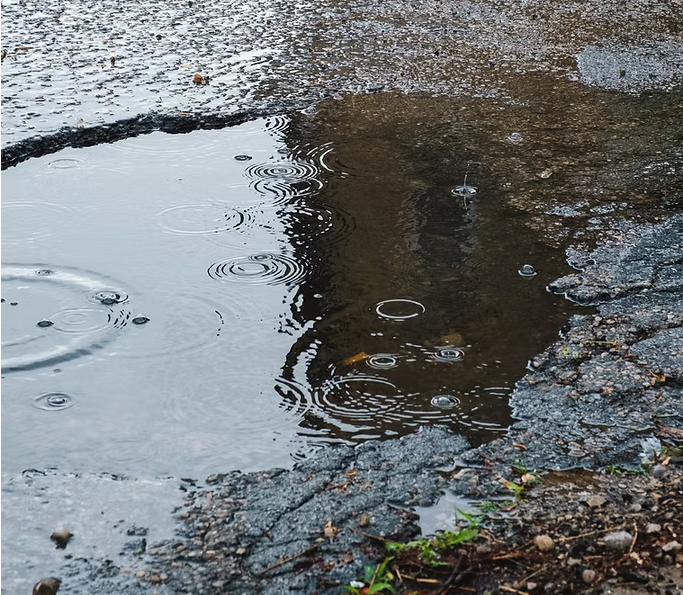
Potholes aren’t just ugly. In a parking lot, they’re a liability risk, a customer experience problem, and a fast track to bigger asphalt failure if you treat them like “next quarter’s issue.” The good news: most potholes follow predictable patterns, and the right repair method (paired with the right prevention plan) can stop the same spots from breaking open again and again.
Below is a practical, property-manager-friendly guide that goes deeper than “fill it and forget it”—so you can choose the repair that matches your budget and the lifespan you actually need.
What causes potholes in parking lots?
Most parking-lot potholes start the same way: water gets into the pavement system (through cracks, joints, or raveled areas), then traffic loads and weather cycles do the rest.
Here are the most common causes you’ll see on commercial lots:
- Moisture intrusion + weakening base: Water seeps below the asphalt, softens the base/subbase, and traffic flexing breaks the surface from underneath.
- Freeze–thaw cycling (in cold climates): Water expands when it freezes, prying open cracks and loosening material until the surface collapses.
- Poor drainage or low spots: Standing water accelerates infiltration and base failure (potholes often cluster where ponding happens).
- Repeated heavy loads in the same paths: Delivery lanes, dumpster pads, and drive aisles take concentrated stress that exposes weak spots faster.
- Raveling and surface aging: Oxidation and wear loosen aggregate; once the surface opens up, water gets a direct route downward.
Key idea: If the pothole formed because the base failed, surface-level patching can look fine for a while—but it’s structurally living on borrowed time.
Are potholes in a parking lot a safety and liability issue?
Yes—especially when potholes create trip hazards, sudden elevation changes, or standing water/ice zones. Beyond customer complaints, potholes can lead to:
- pedestrian injuries (uneven surfaces),
- vehicle damage claims,
- accessibility issues (if routes are affected),
- and higher long-term repair costs as water spreads under adjacent pavement.
Which parking lot pothole repair method is right for you?
Think of pothole repairs in three tiers: temporary, durable, and structural/permanent.
When does cold patch make sense?
Cold patch is best when you need a fast, weather-flexible stopgap (including colder or wetter conditions where hot mix isn’t practical). It’s useful for emergency hazard reduction or off-hours fixes. The tradeoff is durability—especially under heavy traffic.
When is a semi-permanent (hot mix) patch the better value?
A semi-permanent patch focuses on the fundamentals:
- remove water and debris,
- create clean, sound edges,
- place quality material,
- compact thoroughly.
Done right, this approach performs far better than “throw-and-go” patching and can hold up well in active commercial lots.
When do you need full-depth patching?
If you see soft spots, “pumping” water, severe alligator cracking, or the same pothole reappearing in the same place, you likely need full-depth patching:
- remove the failed asphalt and unstable base,
- rebuild and compact the base,
- repave with proper thickness.
It costs more upfront, but it’s often cheaper than paying for repeat patches.
Where does infrared repair fit?
Infrared repair can work well when surrounding asphalt is still in decent condition and you want a seamless blend to reduce water-entry seams—one of the most common reasons patches fail early.
How do you repair a pothole the right way so it lasts?
A long-lasting pothole repair is mostly about prep and compaction, not “miracle mix.”
A durable process typically looks like this:
- Clear debris and remove water (wet holes are failure-prone).
- Square up and cut back to sound pavement (avoid crumbling edges).
- Place patch material correctly and slightly overfill.
- Compact thoroughly until flush with surrounding pavement.
If those steps aren’t followed, even good material fails early.
Why do pothole patches fail so quickly?
Most early failures come from one (or more) of these:
- Water left in the hole or saturated base
- Poor edge preparation (patch placed against weak asphalt)
- Under-compaction (material settles and breaks at the edges)
- Wrong method for the root cause (surface patch used where base has failed)
- Drainage not addressed (water keeps returning)
If your lot keeps getting the same pothole back, it’s a sign to evaluate base stability and drainage—not just re-fill.
How can you prevent potholes in a parking lot?
Prevention is where budgets stop leaking.
Crack sealing and sealcoating on a schedule
Cracks are inlets for water. Crack sealing reduces infiltration; sealcoating protects the surface from oxidation and wear. They’re different services, and most lots benefit from both at the right intervals.
Fix drainage before it fixes you
If you have ponding water, clogged drains, or low spots, you’re feeding pothole formation. Addressing grading and drainage is one of the highest-ROI moves you can make.
Target high-stress zones first
Prioritize:
- entrances/exits,
- delivery lanes,
- dumpster pads,
- loading docks,
- tight-turn areas.
These areas typically need earlier maintenance and sometimes stronger structural sections.
Keep a simple inspection routine
Monthly quick checks plus post-storm walk-throughs catch cracks and depressions early—before they become expensive patches.
When should you stop patching and consider an overlay or resurfacing?
If you’re seeing:
- widespread cracking (especially alligator cracking),
- many patches scattered across the lot,
- repeat potholes in multiple zones,
- drainage-related deterioration,
- frequent complaints despite repairs,
…it may be time to evaluate an overlay/resurface or phased reconstruction. In many cases, proactive rehab costs less over 2–5 years than endless reactive repairs.
FAQ
What’s the fastest way to fix a pothole in a parking lot?
Cold patch is typically the fastest for immediate hazard reduction. For longer performance, a properly prepared and compacted semi-permanent patch usually holds up better.
Can I just fill the pothole without cutting it out?
You can, but quick fills tend to fail sooner when edges are crumbling or moisture is present. Cutting back to sound pavement and compacting correctly makes a big difference.
Why does the same pothole keep coming back?
Usually because the base is weak or wet, drainage is poor, or the repair wasn’t compacted/bonded properly. Repeating the same surface patch without addressing the cause often leads to repeat failures.
What’s better: infrared repair or full-depth patching?
Infrared can be great when surrounding asphalt is healthy and you want a blended repair. Full-depth patching is best when the base has failed or the pothole repeatedly returns.
Conclusion
Potholes in parking lots aren’t random—they’re a predictable result of water intrusion, traffic stress, and pavement aging. The smartest fix starts with diagnosing the root cause: temporary cold patching can reduce immediate risk, but lasting results usually come from semi-permanent methods done correctly—or full-depth patching when the base is compromised. The biggest ROI, though, is prevention: crack sealing, surface protection, drainage correction, and routine inspections that catch problems early.
Why HS&C Pavement Maintenance is Your Ideal Choice for Parking Lot Potholes
HS&C Pavement Maintenance takes a “fix it for good” approach by matching the repair method to the reason the pothole formed—not just the visible damage. That means looking for the common culprits behind repeat failures: moisture intrusion, weak base areas, drainage problems, and high-load traffic zones. The result is fewer recurring potholes, fewer tenant or customer complaints, and a safer lot overall.
Beyond repairs, HS&C Pavement Maintenance helps property managers reduce future patch costs through proactive maintenance planning. With the right combination of crack sealing, targeted repairs in high-stress areas, and protective surface treatments, you can extend pavement life and keep your lot looking professional while controlling long-term spend.
Contact HS&C Pavement Maintenance for Parking Lot Pothole Repair
If you’re tired of patching the same holes every season, HS&C Pavement Maintenance can evaluate the damage, recommend the right repair level, and help you prevent the next round of potholes.
Call HS&C Pavement Maintenance today to schedule an on-site assessment and get a repair plan built for your traffic, timeline, and budget.